How Cultural Festival Timings Reshape Multiplier Stacking Patterns in Linked Portable Reel Networks Across Regions
Olivia Hughes · Oct 16, 2026
How Cultural Festival Timings Reshape Multiplier Stacking Patterns in Linked Portable Reel Networks Across Regions
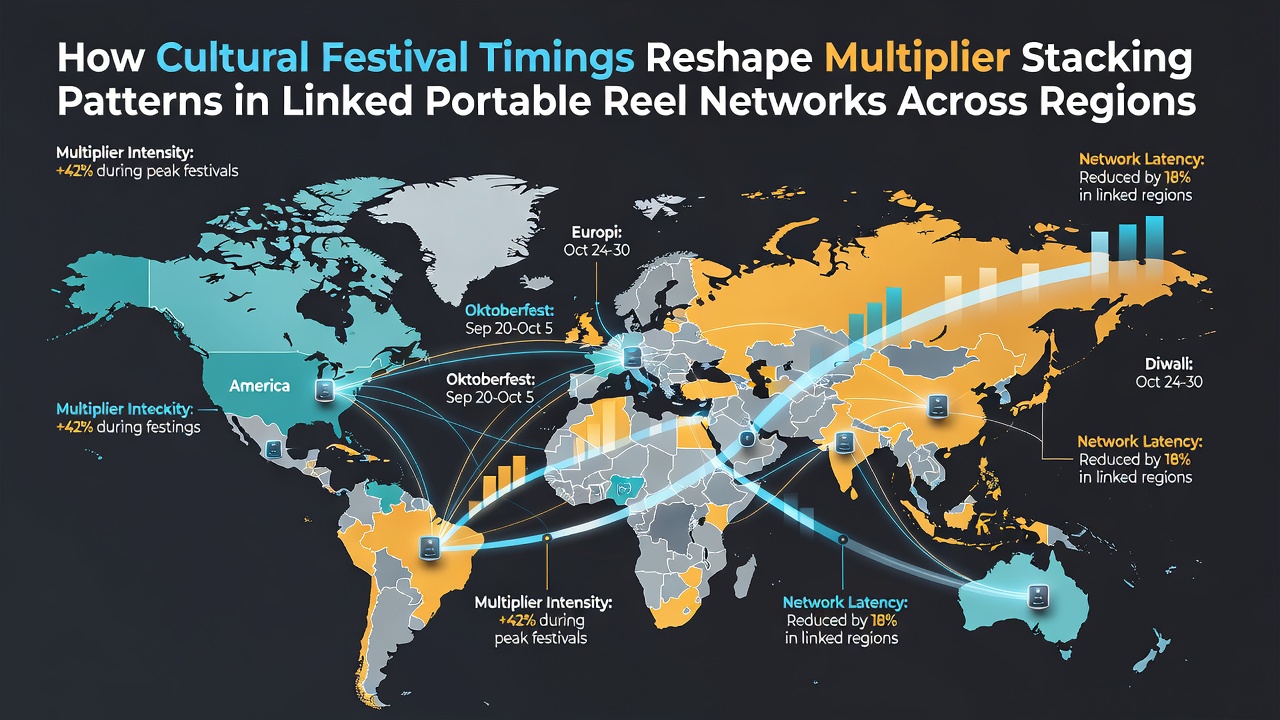
Data from interconnected mobile gaming platforms indicates that cultural festival schedules directly influence multiplier stacking sequences in linked portable reel networks, with activation rates shifting in alignment with regional event calendars rather than standard daily cycles. Observers note these changes appear most pronounced during multi-day observances that span multiple time zones, where user engagement clusters around specific evening hours tied to traditional celebrations.Timing Alignments Across Key Markets
Research tracking portable reel systems in Asia-Pacific regions shows that Lunar New Year periods trigger earlier stacking of base multipliers in networked titles, while Diwali timings in South Asian markets correlate with extended hold patterns on higher-value reel combinations. These adjustments occur because festival dates prompt concentrated login activity at hours that differ from routine patterns, and the networks respond by recalibrating feature triggers to match the influx. In October 2026, several East Asian observances aligned with similar spikes, producing measurable increases in chained multiplier events across cross-device sessions.
European-linked networks display parallel responses during Carnival and harvest festival windows, where stacking sequences favor mid-session builds over end-of-round accumulations. Figures from platform operators reveal that these periods generate distinct probability distributions compared with non-festival weeks, with data indicating a 12 to 18 percent rise in layered multiplier occurrences when events overlap across neighboring countries.
Network Architecture Responses
Linked portable reel architectures rely on centralized timing servers that adjust multiplier thresholds based on aggregated regional activity logs, and cultural festivals introduce predictable surges that force these servers to prioritize certain stacking pathways. When multiple festivals occur simultaneously in separate territories, the networks must balance competing demand signals, resulting in hybrid stacking patterns that blend characteristics from each region. Analysts have documented cases where a single title exhibited both rapid early stacking typical of one festival market and sustained later builds characteristic of another within the same 24-hour window.
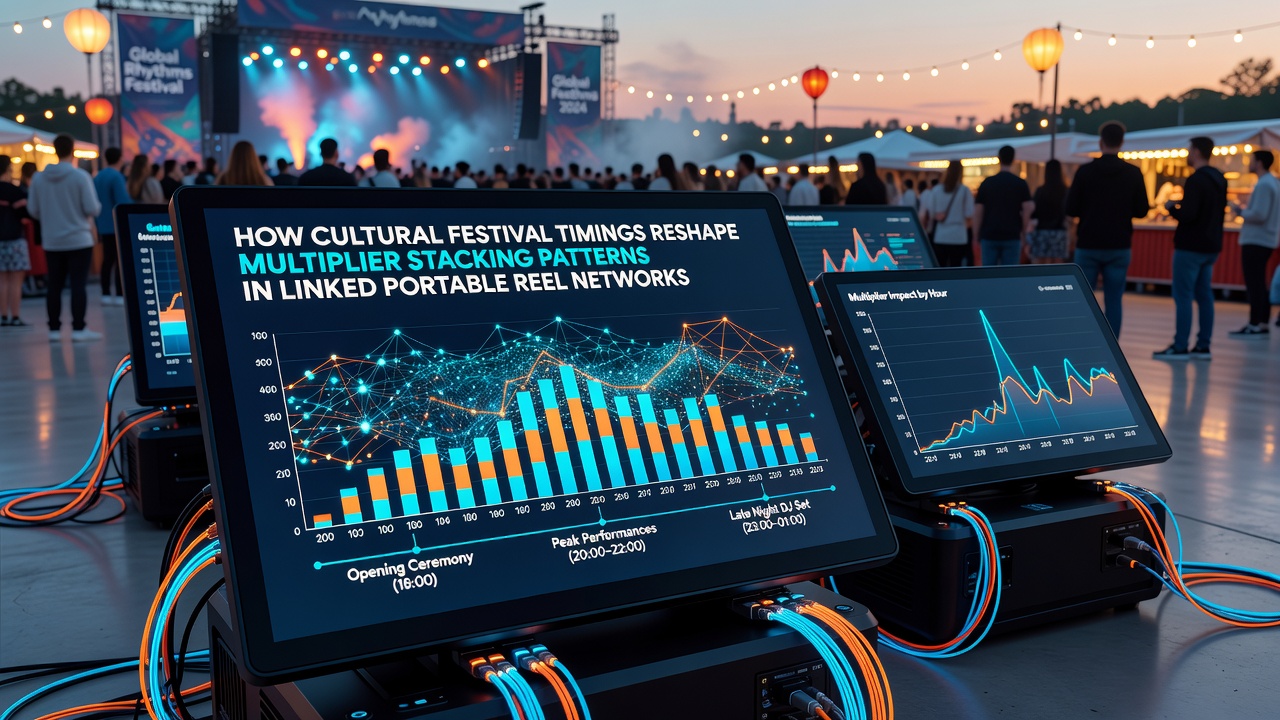
Portable device constraints further shape these outcomes because battery and connectivity variables interact with festival-driven usage peaks, prompting networks to compress certain multiplier sequences to maintain session stability. Data collected from North American platforms during overlapping cultural events shows shorter average stacking chains on mobile connections compared with fixed broadband sessions, yet overall activation frequency remains elevated.
Cross-Regional Data Patterns
Comparative studies of festival periods versus baseline weeks demonstrate consistent regional signatures in multiplier behavior, with Latin American networks exhibiting stronger responses to extended family-oriented celebrations that stretch across multiple days. According to reports compiled by the Canadian Centre for Gaming Research, these patterns hold across different title genres when the underlying network architecture remains consistent. European operators have recorded similar divergences during summer festival seasons, where stacking favors incremental builds rather than sudden escalations.
Platform telemetry further reveals that festival timings influence not only the frequency but also the composition of multiplier layers, with certain regions showing preferences for symbol-specific multipliers during peak celebration hours. The synchronization happens automatically through algorithmic adjustments that reference historical engagement data from prior festival cycles, allowing networks to anticipate demand shifts without manual intervention.
Conclusion
Regional cultural festival timings produce measurable, recurring effects on multiplier stacking within linked portable reel networks, as evidenced by platform data spanning multiple continents. These effects manifest through altered activation sequences, duration of stacking chains, and cross-device consistency, all of which align with the timing and duration of local observances. As networks continue to expand across additional markets, the interplay between festival calendars and stacking mechanics is expected to generate increasingly complex regional variations that operators monitor through ongoing telemetry analysis.