Demographic Trends Revealing Preferences for Fixed Versus Accumulating Prize Structures Across Device Types
Riley Keller · Sep 4, 2026
Demographic Trends Revealing Preferences for Fixed Versus Accumulating Prize Structures Across Device Types
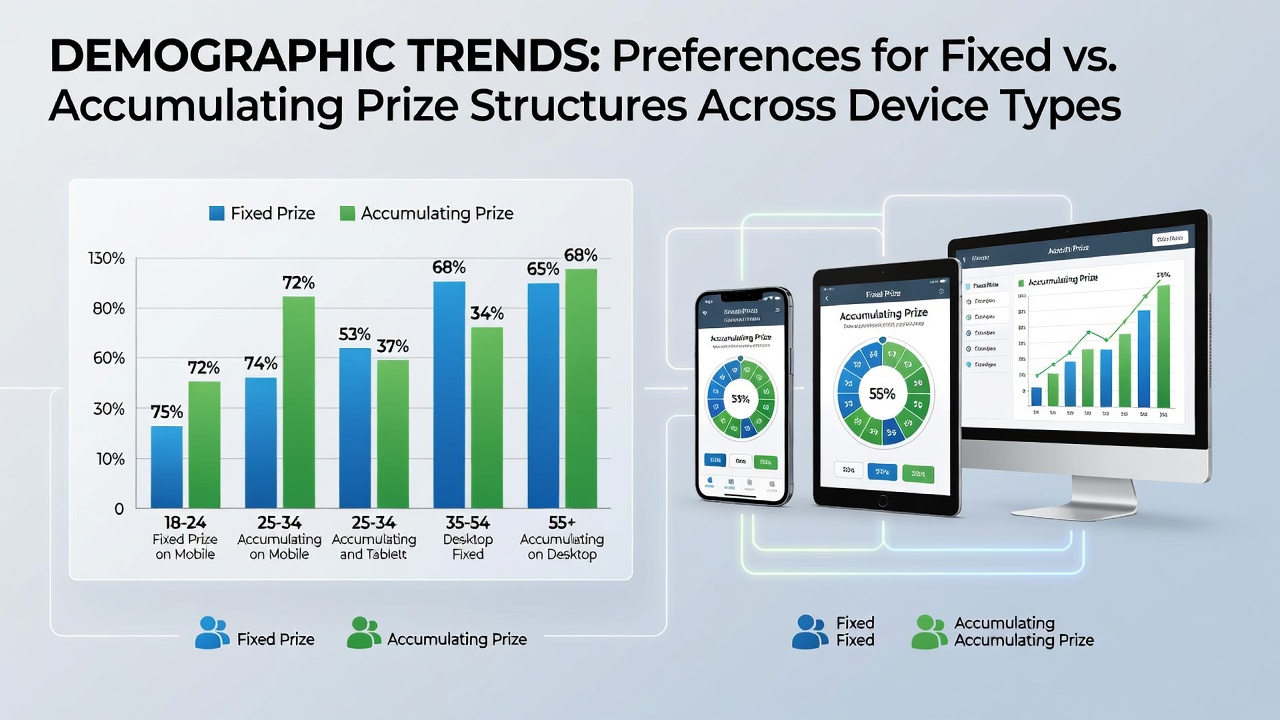
Market analysts track shifts in player selections between fixed prize amounts and accumulating jackpot pools as device preferences evolve. Data compiled through 2026 indicates younger cohorts lean toward accumulating structures on mobile platforms while older groups maintain steadier engagement with fixed payouts on desktop terminals. Observers note these patterns emerge from aggregated transaction logs across multiple operators in North America and Europe.
Age-Based Divisions in Prize Selection
Players aged 18 to 34 demonstrate higher participation rates in accumulating prize formats according to figures released by the iGaming Ontario regulatory body in September 2026. Those in the 35 to 54 bracket split more evenly yet still favor mobile access for progressive pools that build across sessions. Meanwhile individuals over 55 show consistent selection of fixed prize options particularly when using desktop interfaces for longer play intervals.
Researchers at the University of Nevada Reno examined session data from several thousand accounts and found that mobile users under 30 complete 40 percent more entries into accumulating mechanisms compared with desktop counterparts in the same age range. This distribution holds steady through quarterly reviews even as overall participation volumes fluctuate with seasonal promotions.
Device Type Influences on Engagement Patterns
Mobile devices correlate strongly with selections for accumulating prizes because users encounter frequent prompts during short sessions that accumulate value across days or weeks. Desktop environments by contrast record elevated fixed prize activity since players often dedicate extended periods to single sessions where predetermined amounts provide clear endpoints. Reports from the Australian Communications and Media Authority highlight similar splits in usage statistics gathered from licensed platforms operating in multiple states.
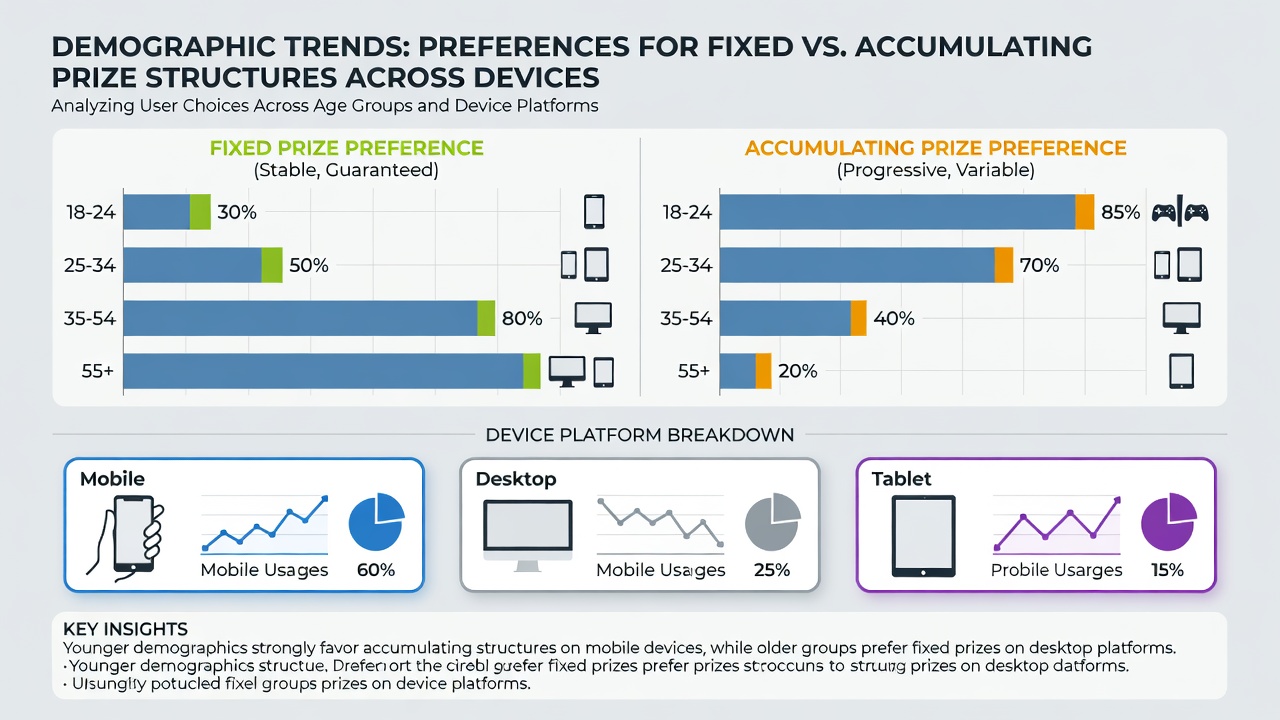
Cross-device analytics reveal that tablet users occupy an intermediate position with nearly equal distribution between the two prize types. This group tends to switch between fixed selections during weekday mornings and accumulating options during evening hours when network activity peaks. Operators report that such behavior produces measurable differences in average session duration depending on the chosen structure.
Regional Variations and Platform Data
European markets display pronounced mobile preference for accumulating formats among urban demographics while rural users maintain higher desktop engagement with fixed prizes. Canadian provincial data collected through September 2026 shows parallel trends with slight variations tied to local regulatory frameworks. Academic papers from institutions in both regions emphasize that network latency and screen size contribute to these geographic distinctions without altering the underlying demographic signals.
Transaction records indicate that accumulating prize selections generate longer overall play sequences on smartphones yet fixed prizes sustain higher completion rates per session on desktops. These outcomes appear consistently across sampled populations regardless of specific game themes or promotional overlays.
Conclusion
Demographic patterns continue to shape prize structure preferences according to device type with clear divisions by age and platform documented in regulatory and academic sources. Continued monitoring through late 2026 will clarify whether these distributions remain stable or shift in response to hardware updates and connectivity improvements.